Healthy Body Fat Percentage Ranges
A practical guide to healthy body fat percentage ranges, what low and high readings can mean, and how to interpret your estimate without turning one number into a diagnosis.

Table of Contents
Quick Healthy Body Fat Percentage Ranges
Healthy body fat percentage is a range, not a single perfect target. Two people can share the same percentage and look different because muscle mass, frame size, fat distribution, age, and training history all change the visual result.
The table below is an interpretation guide for adults. It is not a medical diagnosis and it should not replace advice from a clinician, especially if you have symptoms, a history of disordered eating, pregnancy-related questions, hormone concerns, or a medical condition.
| Group | Common range | What it usually means | Important caution |
|---|---|---|---|
| Men | About 18-24% | Often a sustainable everyday range with enough reserve for normal life, training, and recovery. | Athletes may sit lower, but lower is not automatically healthier. |
| Women | About 25-31% | Often a common healthy range that allows normal hormonal function and energy availability. | Very lean ranges can become hard to maintain and may affect cycles or energy. |
| Active or athletic men | About 10-17% | May support visible definition when training, sleep, and nutrition are consistent. | Staying near the low end year-round can be stressful for many people. |
| Active or athletic women | About 18-24% | May support a fit look with muscle tone while remaining more realistic than stage-lean levels. | Individual cycle health, recovery, and mood matter more than a chart label. |
If you only need a broad category, use the body fat percentage chart. If you need a first estimate, start with the AI body fat calculator and compare the result with the ranges here.
What Healthy Body Fat Percentage Really Means
A healthy range is the range you can maintain while sleeping well, training or moving normally, eating enough, recovering, and keeping regular health markers in a reasonable place. That is different from the leanest number you can reach for a photo, a short challenge, or a competition peak.
Body fat also has useful roles. It stores energy, cushions tissue, supports hormone production, and helps the body handle periods of illness or reduced food intake. Too much fat, especially around the waist, can raise health risk; too little fat can also create problems if energy availability becomes too low.
That is why a useful body fat target starts with context. A recreational lifter, a runner, a postpartum parent, an older adult, and someone managing metabolic risk may all use the same chart but make different decisions.
Best interpretation
Treat body fat percentage as one signal beside waist size, strength, energy, blood pressure, lab work, sleep, and how your body feels over time.
When Low or High Body Fat Needs Attention
The number itself does not diagnose health, but very low or very high readings can be a reason to look closer. The practical question is whether the number matches your goal, symptoms, and long-term sustainability.
| Situation | What to watch | Reasonable next step |
|---|---|---|
| Very low reading | Low energy, persistent hunger, poor sleep, loss of period, low mood, stalled training, or feeling cold often. | Increase the range target, review nutrition, and seek medical advice if symptoms appear. |
| High reading with waist gain | Rising waist size, lower fitness, blood-pressure concerns, or family history of metabolic disease. | Use a modest, sustainable plan and track waist, habits, and medical markers. |
| Single surprising result | A result that conflicts with photos, tape measurements, or how clothes fit. | Repeat the same method under similar conditions before changing your plan. |
| Clinical decision needed | Medication dosing, diagnosis, fertility, eating-disorder recovery, or disease management. | Use a qualified clinician and appropriate testing rather than an online estimate alone. |
For general screening, remember that BMI is limited because it does not directly measure body fat. The CDC BMI FAQ explains that BMI is a screening tool, not a body-composition measurement.
How to Measure Healthy Body Fat Percentage Without Overreacting
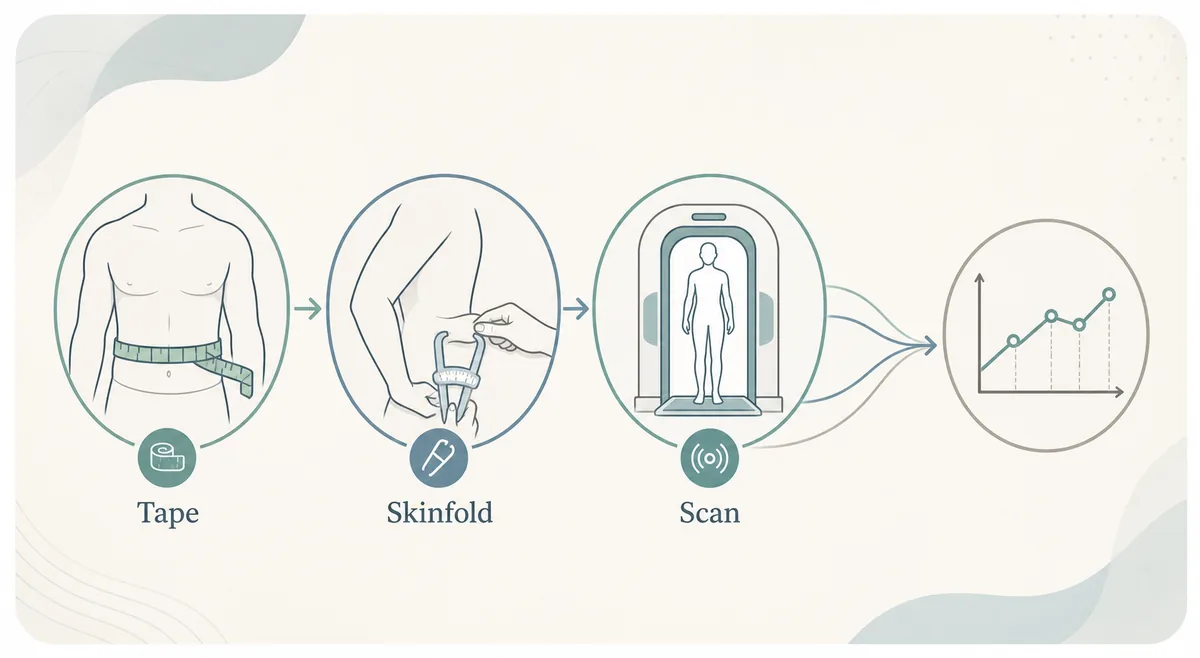
No convenient method is perfect. The goal is to use the same method consistently, understand its limits, and look for trends instead of treating one estimate as permanent truth.
| Method | Best for | Main limit | Repeat tip |
|---|---|---|---|
| Photo or AI estimate | Fast visual range checks and progress feedback. | Lighting, pose, clothing, and muscle mass can shift the estimate. | Use similar lighting, distance, and posture each time. |
| Tape measurement | At-home tracking without uploading a photo. | Small placement changes can change the result. | Measure at the same sites after a normal exhale. |
| Skinfold calipers | Local fat-fold tracking when done by a practiced person. | Technique and formula choice affect accuracy. | Use the same tester and same sites. |
| DEXA or clinical scan | Higher-detail body composition assessment. | Costs more and still depends on protocol and machine. | Use the same facility and protocol when comparing scans. |
How to Use Your Range by Goal
A healthy range becomes useful when it helps you choose the next action. It should reduce confusion, not create pressure to chase a lower number every week.
A practical workflow
- Estimate your current range with one method, then compare it with the chart rather than guessing from scale weight alone.
- Set a goal range that matches your life. For many people, a maintainable healthy range beats a short-term extreme target.
- Track trends every 2-4 weeks. Daily body water, food volume, and lighting can make short-term changes misleading.
- If you are already in a healthy range, focus on strength, waist trend, sleep, and consistency instead of forcing more fat loss.
- If your result is high and health risk is a concern, use the range as a starting point for gradual habits and medical follow-up when appropriate.
For a visual comparison, use the body fat visualizer. For tape-based checking, the Navy body fat calculator gives a non-photo estimate.
FAQ About Healthy Body Fat Percentage
What is a healthy body fat percentage for men?
Many men fall into a healthy everyday range around 18-24%, while active or athletic men may sit closer to 10-17%. The best target depends on energy, waist size, training, and health markers.
What is a healthy body fat percentage for women?
Many women fall into a healthy everyday range around 25-31%, while active or athletic women may sit around 18-24%. Very low ranges are not automatically better and can be hard to sustain.
Is 15% body fat healthy?
For many men, 15% can be a fit and realistic level. For many women, 15% is very lean and may not be a good long-term target unless carefully managed.
Can body fat percentage be healthier than BMI?
It can add more body-composition context because BMI does not separate fat from muscle. BMI, waist size, body fat estimates, and clinical markers are most useful together.
How often should I check my body fat percentage?
Every 2-4 weeks is enough for most people. Checking too often can exaggerate normal day-to-day variation.
Final takeaway
Healthy body fat percentage is about a sustainable range that supports your body and your goals. Use the number as context, not as a verdict on your health or appearance.
Sources and Further Reading
- CDC BMI Frequently Asked Questions - BMI use and limitations as a screening measure.
- American Council on Exercise: Body Fat Percentage Chart - Common body-fat category context.
- Cleveland Clinic: DXA Scan - Clinical scan overview and limitations.