How accurate is the AI body fat calculator?
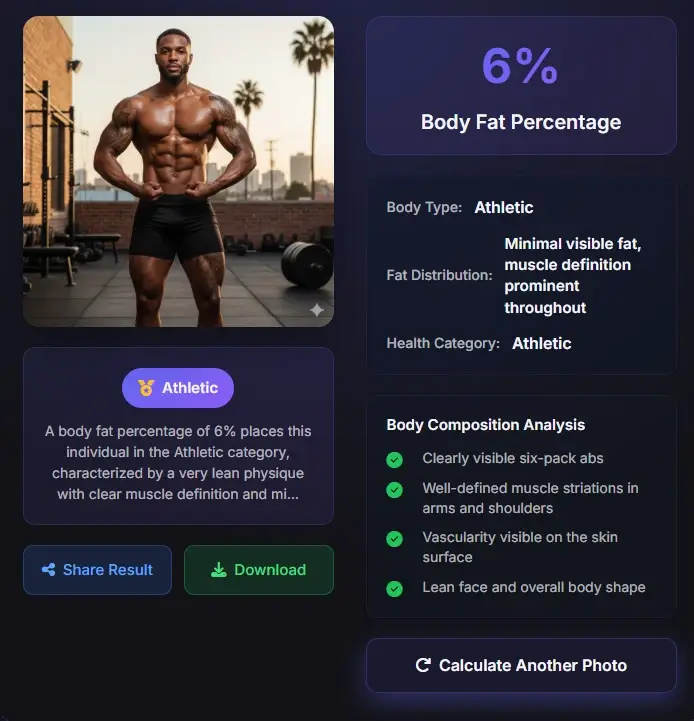
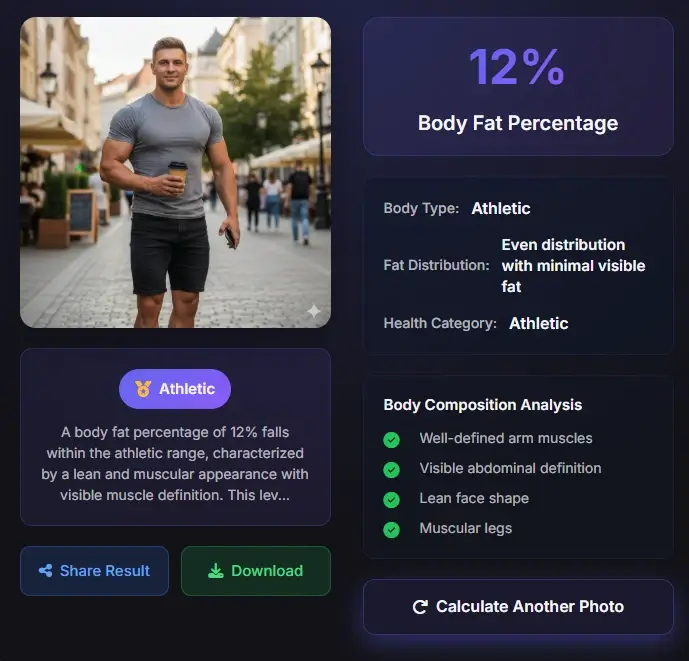
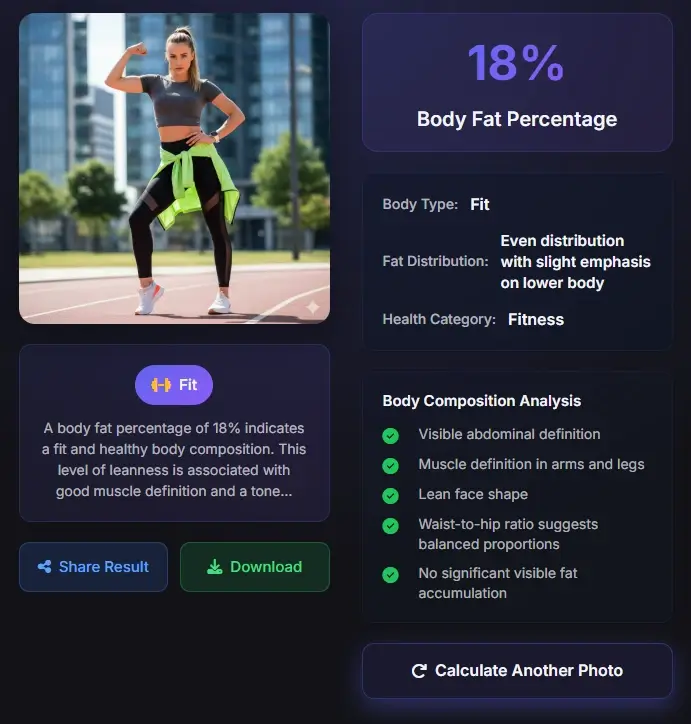
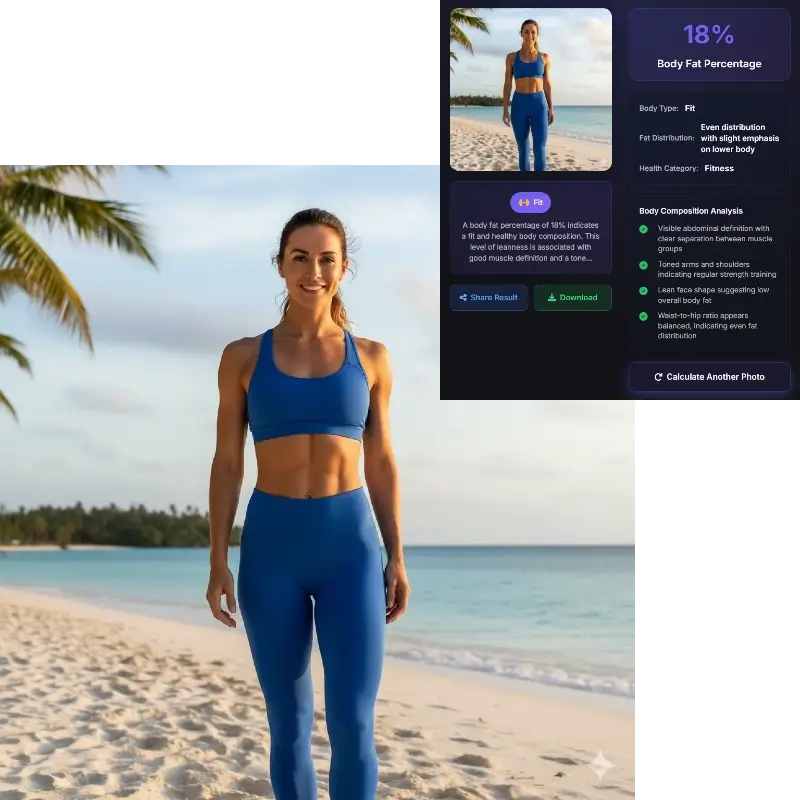
Our AI body fat calculator provides estimates within 2-4% of professional methods like DEXA scans for most users. Accuracy depends on photo quality and lighting. For best results, use a clear, well-lit photo showing your torso or full body. While not as precise as a DEXA scan, it's more accurate than BMI and comparable to caliper measurements.
How do I calculate body fat percentage?
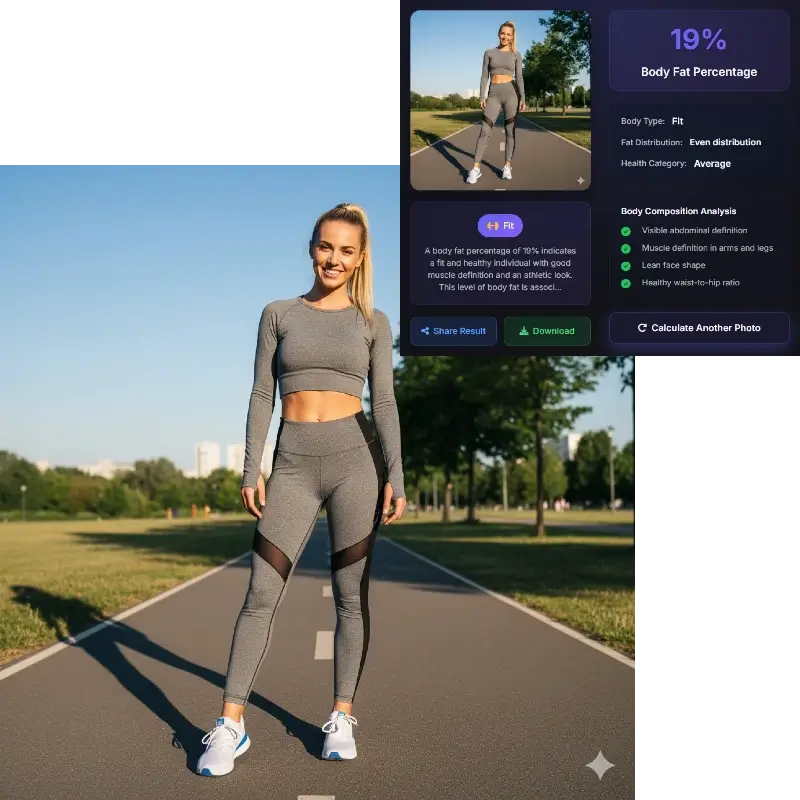
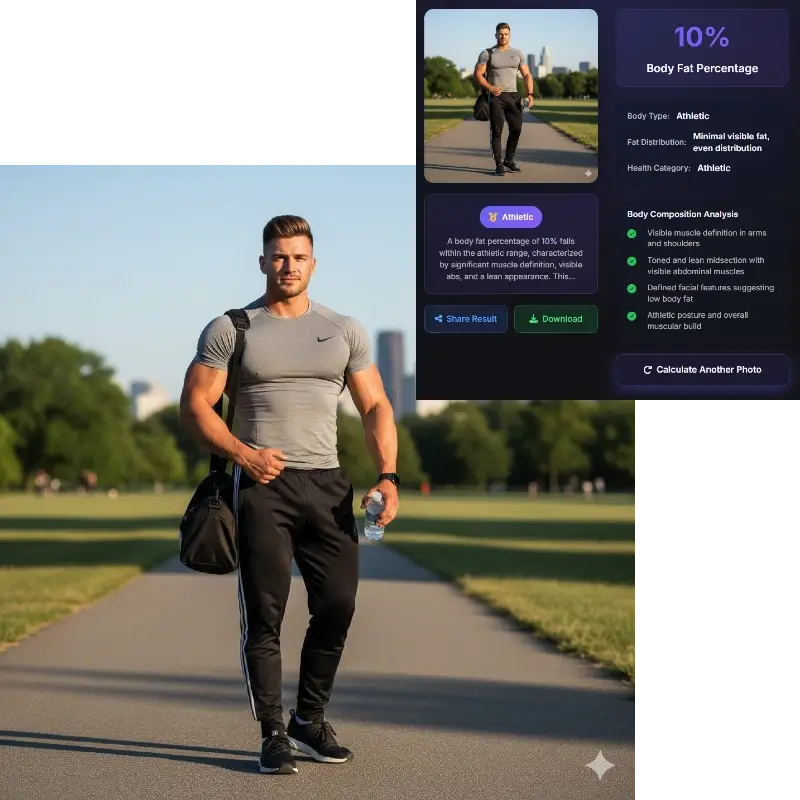
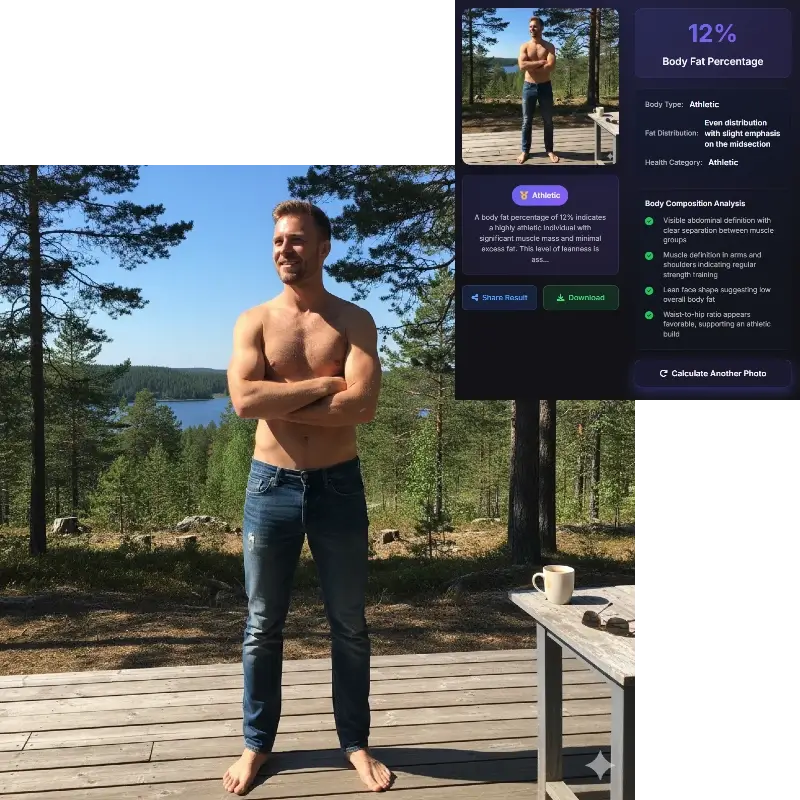
With our AI body fat calculator, simply upload a clear photo of your body. The AI analyzes your physique, fat distribution, and muscle definition to estimate your body fat percentage. Traditional methods require tape measurements (Navy method), calipers (skinfold test), or expensive equipment (DEXA scan). Our AI method is free, instant, and requires no tools.
What is a healthy body fat percentage?
Healthy body fat percentage varies by gender and age. For men: 10-20% is athletic to fit, 18-24% is average healthy. For women: 18-28% is athletic to fit, 25-31% is average healthy. Essential fat (minimum needed for health) is 2-5% for men and 10-13% for women. Our calculator shows where you fall on the body fat percentage chart.
Is this body fat calculator free?
Yes, completely free! Upload your photo and get instant body fat percentage results. No registration, payment, or subscription required. You can calculate body fat from multiple photos to track your progress over time.
Why is body fat percentage better than BMI?
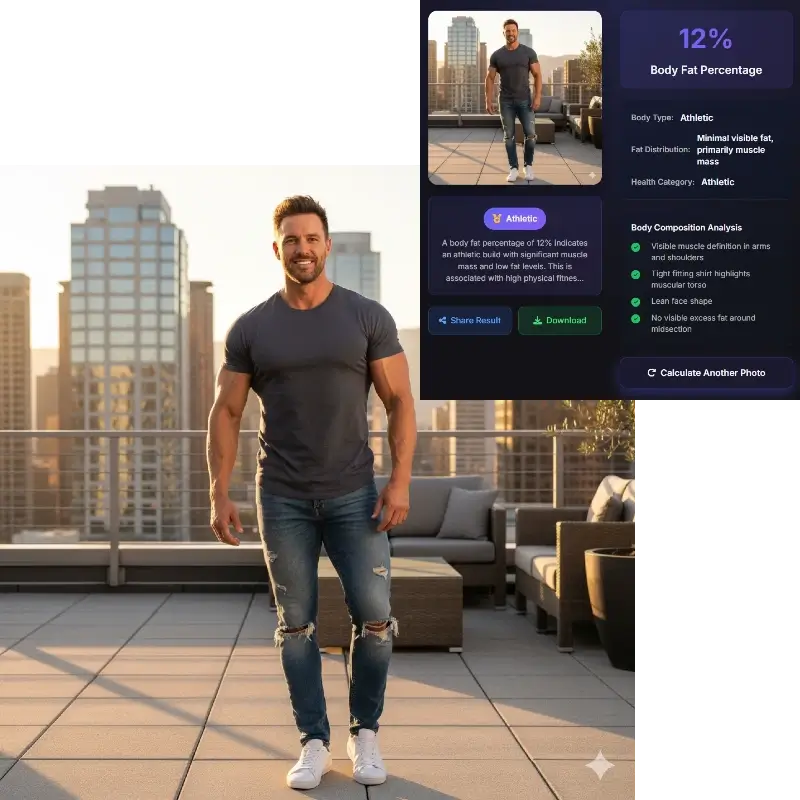
BMI only uses height and weight, so it can't tell the difference between muscle and fat. A muscular athlete might have a 'overweight' BMI but only 12% body fat. Our AI body fat calculator actually analyzes your body composition, giving you a more accurate picture of your health and fitness level.
What photo should I use for best results?
For the most accurate body fat calculation: use good lighting (natural light is best), wear fitted clothing or swimwear, stand in a relaxed natural pose, include your torso at minimum (full body is better), and avoid baggy clothes that hide your physique. Front-facing photos work best.
How often should I check my body fat percentage?
For tracking fitness progress, check every 2-4 weeks. Body fat changes slowly, so daily measurements aren't useful. Take photos in the same conditions (same time of day, lighting, clothing) for consistent comparisons. Our AI body fat calculator makes it easy to track changes over time.
Can I use this to track weight loss progress?
Absolutely! Body fat percentage is a better metric than scale weight for tracking fat loss. You might be losing fat while gaining muscle, which wouldn't show on a scale but would show in your body fat percentage. Use our calculator regularly to see your true progress beyond just pounds lost.
Can AI estimate body fat from a picture?
Yes, AI can estimate body fat percentage from a clear body photo by reading visible body shape, muscle definition, and fat distribution. The result should be treated as an estimate, not a medical measurement. For best consistency, use similar lighting, pose, clothing, and camera distance each time.
Can this estimate body fat from a picture for men and women?
Yes. The AI body fat estimator can analyze clear male or female body photos and return a visual body fat percentage estimate. It works best when the torso or full body is visible, clothing is fitted, lighting is even, and the pose is relaxed. Treat the result as a practical estimate rather than a medical measurement.
Should I use a skinfold calculator or Navy calculator instead?
Use the method that matches your inputs. If you have reliable calipers and know the skinfold sites, a skinfold calculator can be useful. If you prefer tape measurements, the Navy body fat calculator is a good cross-check. If you want a fast visual estimate, use this AI photo calculator and compare the result with BMI or tape-based methods.
Can AI estimate body fat percentage from a photo?
Yes, AI can estimate a body fat percentage range from visible cues such as waist shape, muscle definition, and fat distribution. It cannot directly measure fat mass, so use the photo result for screening and progress tracking rather than diagnosis.