What Body Fat Percentage to See Abs? Realistic Ranges for Men and Women
A practical guide to the body-fat ranges where abdominal definition usually starts to show, why two people at the same percentage can look different, and how to use photos, charts, and calculators without turning a range into a diagnosis.

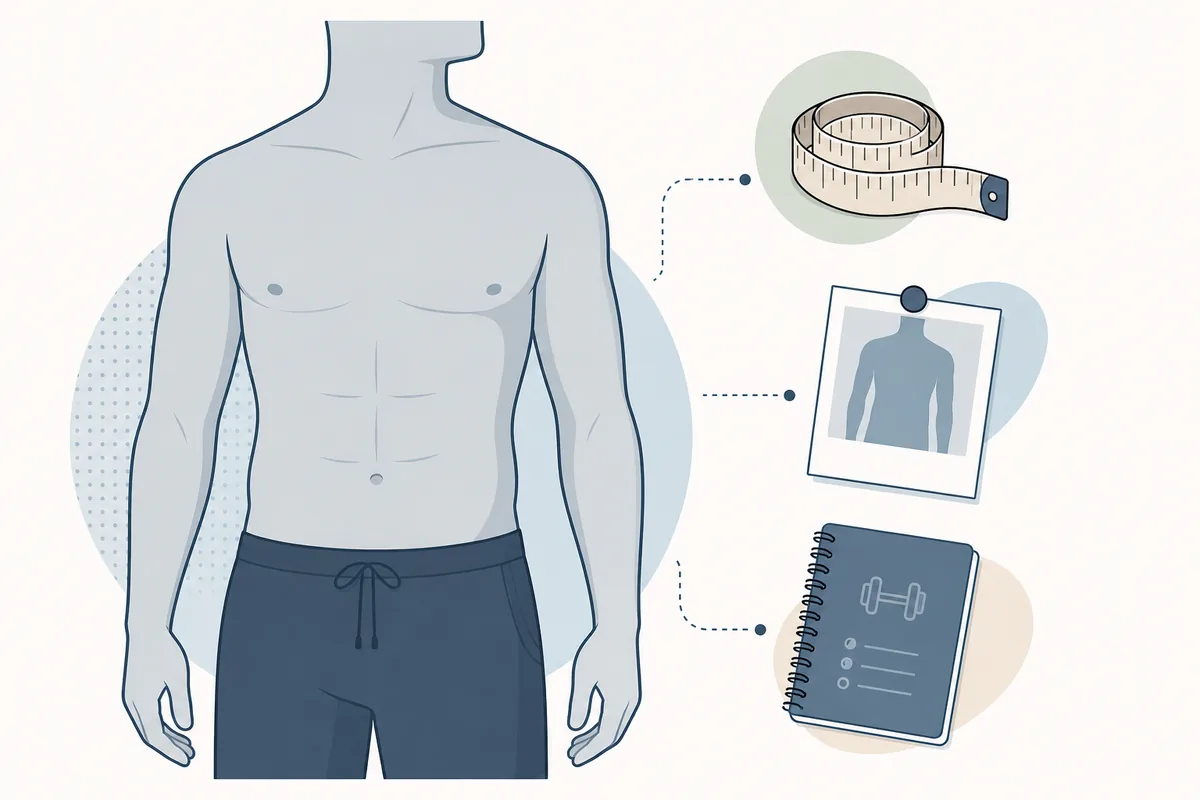
Table of Contents
Quick Answer: Body Fat Ranges for Visible Abs
If you search for what body fat percentage to see abs, the most honest answer is a range. For men, abdominal lines often begin to appear in the mid-teens when there is enough abdominal muscle. A clear six-pack is more common in the low teens, while stage-lean definition is usually lower and much harder to maintain.
For women, visible abdominal tone usually appears at higher percentages than it does for men because essential fat needs are different. Some women show a defined waist and upper-ab line in the low twenties, while sharper athletic definition is more common in the high teens. Going lower is not automatically healthier or more sustainable.
Use the table as a visual reference, then compare it with your own photos, training level, and comfort. The best target is the leanest range you can maintain while sleeping well, training well, and feeling normal, not the lowest number on a chart.
| Group | First visible signs | Clearer definition | Important note |
|---|---|---|---|
| Men | About 14-17% if abdominal muscle is developed. | Often around 10-13%; below that is usually more demanding. | Less muscle can hide abs even at a lower estimate. |
| Women | About 21-24% for visible tone or upper-ab outline. | Often around 16-20% for a lean athletic look. | Very low ranges may affect comfort, cycle health, and sustainability. |
| Anyone | Lighting, posture, and hydration can change the look day to day. | Consistent definition matters more than one perfect photo. | Treat the number as an estimate, not a diagnosis. |
Practical target
Aim for a sustainable range and a repeatable tracking method. If visible abs require extreme dieting, poor recovery, or constant anxiety, the target is probably too aggressive.
Why Abs Look Different at the Same Body Fat Percentage
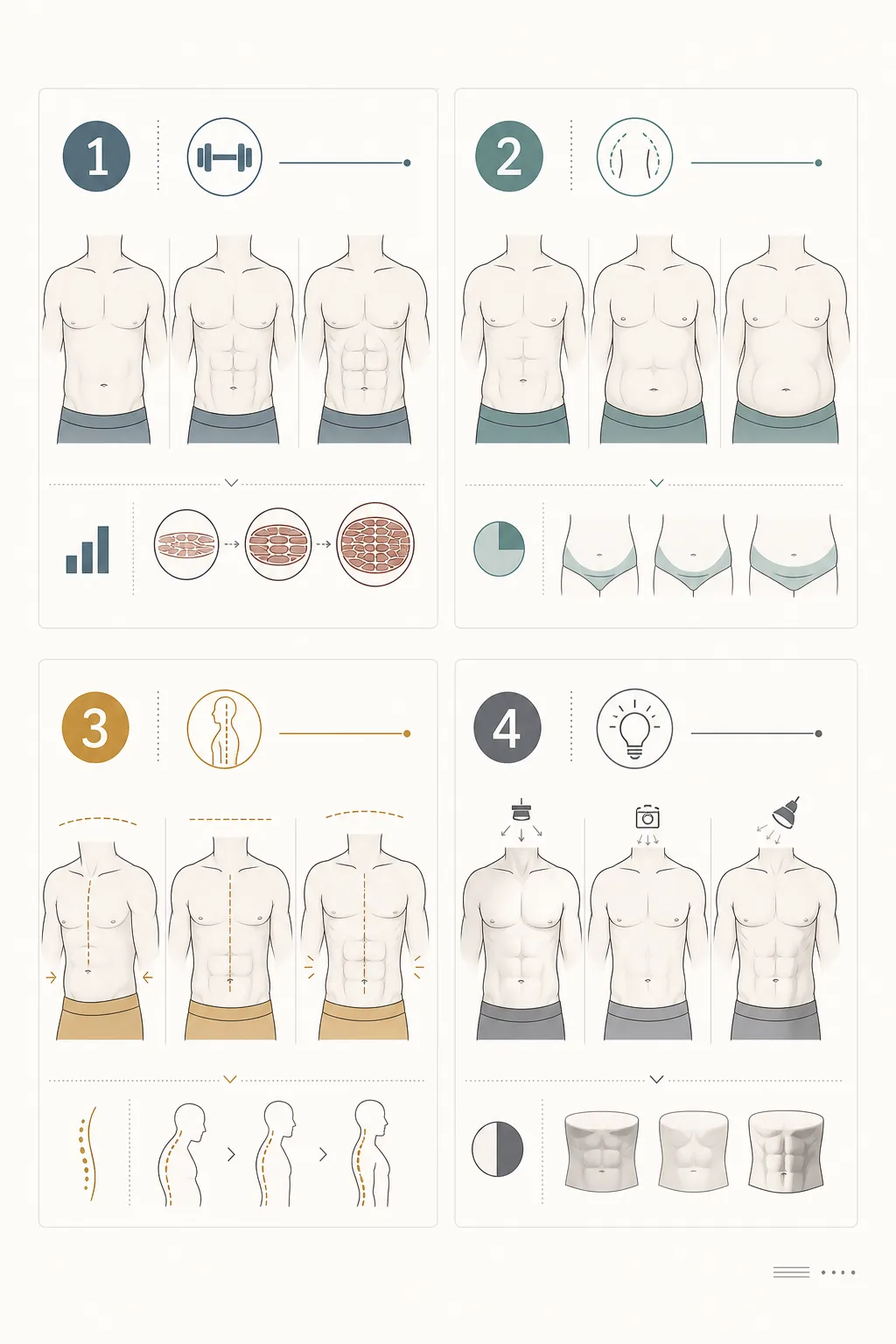
Two people can both be estimated at 15% body fat and still look very different. That does not mean one estimate is automatically wrong. Ab visibility is a visual outcome, and several non-percentage factors change the result.
Muscle mass changes the outline
A thicker rectus abdominis and stronger obliques create more shape under the skin. Someone who trains abs and compounds lifts may show definition earlier than someone with the same body fat but less muscle.
Fat distribution is individual
Some people store more fat around the lower belly or lower back, while others store more on hips, thighs, chest, or limbs. A person can be relatively lean overall and still have softer abdominal visibility.
Posture and water retention matter
A relaxed stance, bloating, sodium intake, stress, and menstrual-cycle changes can make the midsection look softer. A flexed pose in overhead lighting can make the same body look leaner.
Photos can exaggerate or hide definition
Shadows, pump, tan, camera height, and lens distance can all change how abs look. Compare relaxed photos taken in similar conditions instead of judging yourself against social media highlights.
How to Estimate Your Own Range More Realistically
Start with a broad range, then narrow it with multiple signals. The body fat percentage chart helps interpret common categories, while the body fat visualizer helps compare visible cues.
- Take repeatable photos. Use the same room, distance, lighting, clothing, and relaxed posture every 2-4 weeks. One flattering or unflattering photo is not enough.
- Estimate before you optimize. Use a photo-based estimate from the AI body fat calculator, a tape method, or another consistent method before deciding whether abs are a realistic short-term goal.
- Compare more than the stomach. Look at waist shape, lower back, shoulder separation, arms, legs, and overall body weight trend. Abs alone can mislead you.
- Watch performance and recovery. If strength, sleep, mood, or energy drops sharply, the body-fat goal may be too aggressive even if the mirror looks leaner.
A range-based approach also helps avoid false precision. Instead of asking whether you are exactly 12.8%, ask whether your current evidence fits roughly 14-17%, 10-13%, or another practical band.
Common Mistakes When Chasing Visible Abs
Visible abs are a popular goal, but the way people interpret body-fat numbers can make the process less useful and less healthy.
| Mistake | Why it is a problem | Better approach |
|---|---|---|
| Using a single chart as a promise | Charts describe common ranges, not your genetics, muscle mass, or lifestyle. | Use charts as interpretation after you estimate your own range. |
| Comparing flexed photos to relaxed examples | Flexing, pump, and lighting can create a much leaner look. | Compare relaxed photos with similar lighting and distance. |
| Chasing the lowest possible percentage | Lower is not always healthier or easier to maintain. | Choose the leanest range that still supports energy, training, and recovery. |
| Ignoring muscle-building work | Without enough abdominal and total-body muscle, abs may not show clearly even after fat loss. | Combine gradual fat loss with progressive strength training and protein. |
How to Use Charts, Photos, and Calculators Together
The most useful workflow is not one tool versus another. Use a calculator or photo estimate to produce a starting range, use a chart to interpret the range, then use repeatable photos to see whether the visual change matches the number.
BMI can still provide broad weight-status context, but it cannot separate muscle from fat. Tape methods can be useful when photos are not ideal. Clinical tools such as DEXA can be more direct, but they cost more and still should be interpreted with context.
If your goal is visible abs, connect the target to daily behavior: a moderate calorie deficit if fat loss is needed, enough protein, consistent resistance training, sleep, and patience. The abs question is really a body-composition question, not only a body-fat-number question.
Next step
Start with the AI body fat calculator, then use the body fat percentage chart to understand what your range usually means.
FAQ About Body Fat Percentage and Abs
At what body fat percentage do abs show for men?
Some outline often appears around 14-17% if abdominal muscle is developed. Clearer abs are more common around 10-13%, but the exact point varies by muscle mass and fat distribution.
At what body fat percentage do abs show for women?
Many women begin to show abdominal tone around 21-24%, while clearer athletic definition is more common around 16-20%. Lower is not automatically healthier or necessary.
Can I have low body fat and still not see abs?
Yes. Limited abdominal muscle, lower-belly fat storage, posture, bloating, lighting, or photo angle can all hide definition even when the estimate is relatively lean.
Are visible abs a good health goal?
They can be a fitness or physique goal, but they are not required for health. A sustainable body-fat range, good strength, sleep, energy, and medical context matter more than showing abs every day.
How often should I check progress?
Every 2-4 weeks is usually more useful than daily checking. Use the same photo setup, similar hydration, and the same estimate method when possible.
Final takeaway
Visible abs usually appear in predictable body-fat ranges, but the useful answer is still personal. Use ranges, photos, and calculators together, and avoid turning a visual goal into a medical or moral judgment.
Sources and Further Reading
- American Council on Exercise: Body Fat Percentage Chart - General body-fat category ranges.
- CDC BMI Frequently Asked Questions - Why BMI is a screening tool and does not directly measure body fat.
- Harvard T.H. Chan School of Public Health: Abdominal Fat - Context on abdominal fat and body-size measurements.