Body Fat Percentage Chart: Healthy Ranges for Men and Women
Use this body fat percentage chart to compare men’s and women’s ranges, understand what 10%, 15%, or 20% may mean, and read estimates without treating a chart as a diagnosis.

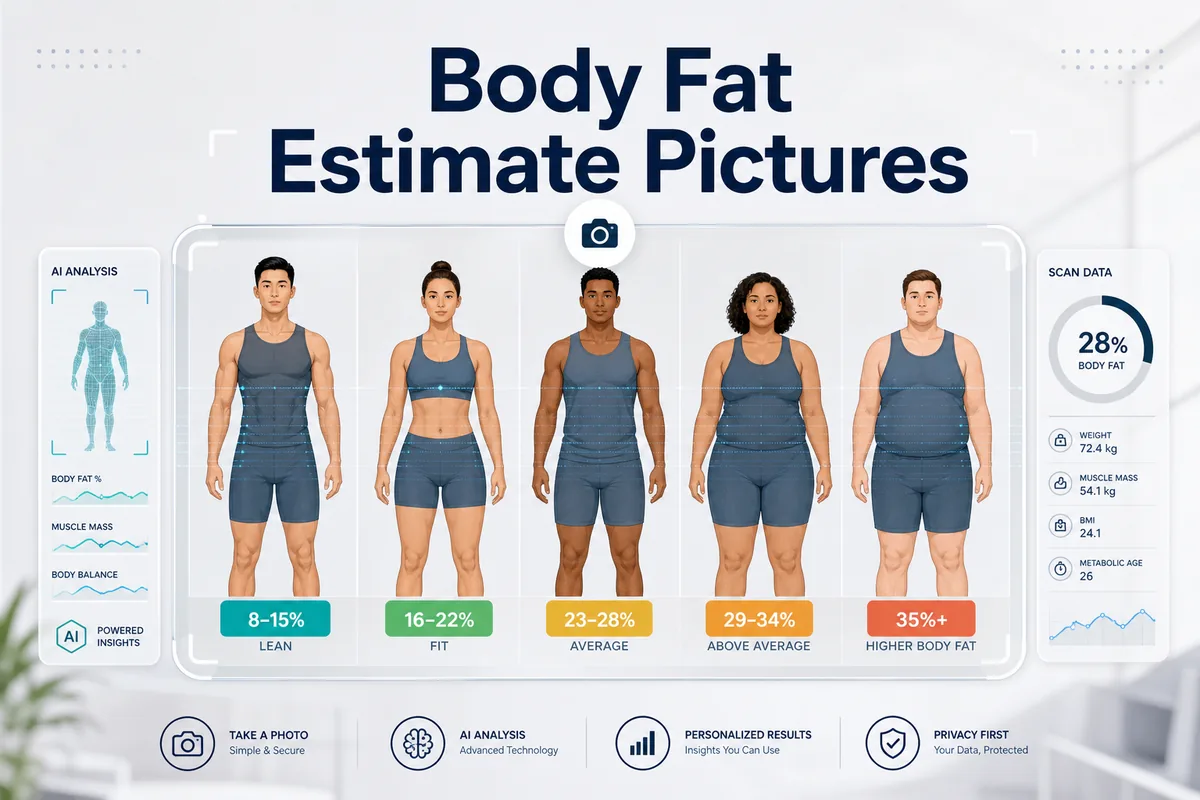
Table of Contents
What a Body Fat Percentage Chart Actually Tells You
A body fat percentage chart groups estimates into practical ranges such as essential fat, athletic, fitness, average, and higher body fat. It answers what a reported percentage may mean, but it does not measure you by itself.
The same percentage can look different on two people because muscle mass, frame size, posture, and fat distribution are different. That is why a chart should be read as a range guide rather than a promise about appearance.
Use the chart after a consistent estimate from tape measurements, photos, calipers, or a clinical method. The method and its repeatability matter as much as the category.
Best use case
Use the chart to interpret a repeatable estimate, not to guess an exact percentage from a single photo or mirror check.
Healthy Body Fat Percentage Ranges for Men and Women
Men and women have different essential-fat requirements, so a useful body fat chart separates their ranges. Treat the categories as broad reference points, not universal medical cutoffs.
How to read the categories
- Essential fat: the minimum level needed for normal biological function, not a typical long-term target for most people.
- Athletic and fitness: ranges often associated with visible definition, active training, and lower overall fat storage.
- Average or healthy: a common everyday range where many adults look and function well without extreme leanness.
- Above average and obesity: ranges where visible fat storage is usually higher and health risk may rise depending on other factors.
- Context still matters: age, muscle mass, and fat distribution can change how the same percentage looks on different people.
A healthy body fat percentage is not just the lowest possible number. A realistic healthy range is the one you can maintain while supporting training, recovery, appetite, and long-term health.
Body Fat Percentage Chart for Men and Women
This table is a practical reference for common categories. It helps you compare body fat percentage ranges for men and women without turning a broad estimate into a diagnosis.
| Range | Men: common meaning | Women: common meaning | How to use the range |
|---|---|---|---|
| Essential fat | About 2-5%, usually too lean for most men to maintain comfortably. | About 10-13%, the lower biological minimum for women. | Understand this as a minimum reference, not a general goal. |
| Athletic | Roughly 6-13% with visible abs and clear muscle definition. | Roughly 14-20% with visible tone and a lean athletic look. | Useful for athletes, physique goals, and image comparisons. |
| Fitness | Around 14-17% with good definition but more sustainable than extreme leanness. | Around 21-24% with a fit appearance and visible tone. | Often a realistic target for active people. |
| Average / healthy | Around 18-24% with less definition but still a common healthy range. | Around 25-31% with natural curves and normal body-fat storage. | A strong baseline reference for most adults. |
| Higher body fat | About 25%+ with softer waist and less visible muscle shape. | About 32%+ with more visible fat storage in common areas. | A screening reference for when lifestyle or health review may help. |
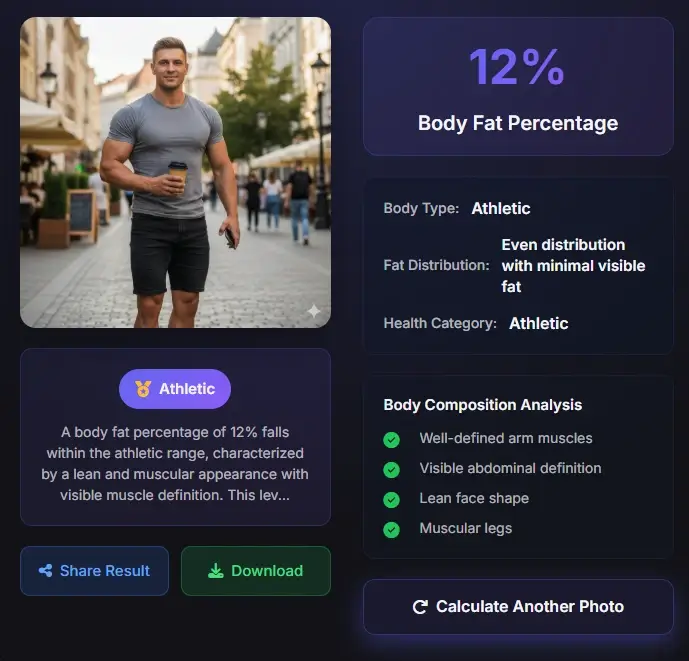
For a tape-based estimate, use the Navy body fat calculator. For a photo-based estimate, compare the result with the body fat estimate pictures guide.
How to Read a Body Fat Chart Without Misjudging Yourself
A chart can make ranges easier to understand, but it cannot predict appearance perfectly. Compare more than abdominal definition and keep the measurement method consistent.
Do not compare only abs
Waist shape, lower back, arms, hips, thighs, and overall muscle mass all change how a percentage looks.
Do not ignore muscle mass
A muscular person often looks leaner at the same body fat percentage than a person with less muscle.
Do not confuse visual leanness with health by default
The leanest category is not automatically the healthiest or most sustainable category for every person.
Body Fat Chart vs BMI, Photos, Navy Method, and DEXA
A chart interprets a result; it does not create one. Compare the method that produced your estimate before deciding how much confidence to place in a category.
| Method | Main strength | Main limit | When it helps most |
|---|---|---|---|
| Body fat percentage chart | Easy way to interpret body-fat ranges. | Cannot estimate your percentage by itself. | Understanding what an estimate means. |
| Photo-based estimate | Useful visual range estimate from a clear photo. | Affected by pose, lighting, clothing, and muscle mass. | Quick visual feedback and progress tracking. |
| BMI | Fast screening from height and weight. | Does not separate fat from muscle. | Basic adult weight-status context. |
| Navy Method | At-home estimate from tape measurements. | Sensitive to where and how you measure. | When you want a non-photo estimate. |
| DEXA | More direct body composition assessment. | Costs more and needs equipment. | When higher accuracy matters. |
BMI is a screening measure and does not directly measure body fat. Use the chart with a consistent estimate and review trends rather than treating one number as a diagnosis.
Best Way to Use the Chart for Progress Tracking
The chart is most useful when it supports the same measurement routine every few weeks instead of encouraging daily changes in interpretation.
A simple workflow
- Estimate your body fat with one consistent method, such as a clear photo, AI estimate, or tape measurement.
- Use the chart to translate that estimate into a realistic category and range.
- Track changes every 2-4 weeks instead of chasing daily fluctuations.
- Compare your result with waist size, scale weight, training performance, and how your clothes fit.
- Review trends over months, not one isolated reading.
Record the method, conditions, and date each time. If your result changes unexpectedly, repeat the measurement before making a major decision.
FAQ About Body Fat Percentage Charts
What is a healthy body fat percentage?
It depends on sex, age, muscle mass, health context, and how the estimate was produced. Use the chart as a broad range reference rather than one universal target.
What body fat percentage is needed to see abs?
Visible abs vary by sex, muscle development, fat distribution, lighting, and pose. A chart can provide context, but it cannot guarantee when abs will appear for one person.
What do 10%, 15%, and 20% body fat mean?
They are reference points, not identical appearances. Lower percentages often show more definition, but muscle mass and fat distribution can make two people at the same number look different.
Is a body fat percentage chart accurate?
The chart can organize ranges accurately, but it cannot make an inaccurate measurement precise. Confidence depends on the estimating method and whether you repeat it consistently.
How should I estimate body fat before using a chart?
Use one repeatable method such as tape measurements, a clear photo estimate, calipers, or a clinical assessment. Then use the chart to interpret the result.
Does a body fat percentage chart change by age?
Age can affect what is common, but age alone does not determine a diagnosis or goal. Read the range with sex, health context, muscle mass, and measurement method.
Is a body fat chart better than BMI?
They answer different questions. BMI uses height and weight for broad screening, while a body fat chart helps interpret a body-composition estimate.
Can I use the chart to decide whether to lose fat?
Use it as one context signal, not as medical advice. Consider your health, performance, waist trend, nutrition, and professional guidance when a decision affects your wellbeing.
Final takeaway
A body fat percentage chart is most useful for interpreting a range and tracking a consistent estimate over time. It should support context, not replace measurement or professional advice.
Sources and Further Reading
- CDC BMI Frequently Asked Questions - BMI use and limitations.
- American Council on Exercise: Body Fat Percentage Chart - General body-fat percentage category context.
- Cleveland Clinic: DXA Scan - Overview of DXA scanning.