How to Lower Body Fat Percentage Safely and Sustainably
A practical guide to losing fat without chasing an extreme number, losing strength, or mistaking short-term water changes for real progress.


In this guide
The basic plan for lowering body fat percentage
The phrase how to lower body fat percentage sounds like one calculation, but the useful answer is a process. Your body-fat reading can move because of water, food in your digestive system, glycogen, menstrual-cycle changes, measurement error, or a real change in fat mass. That is why the goal should be a repeatable trend rather than the lowest number you can produce on one day.
Start by choosing a method you can repeat, then set a food and activity routine that you could keep for several weeks. A small calorie deficit is usually easier to sustain than an aggressive cut. Keep enough protein and resistance training to support lean mass, add walking or cardio for health and energy expenditure, and adjust only after you have enough consistent data.
If you want a starting estimate for calories, protein, target weight, and a slower recomposition approach, use the Body Recomposition Calculator alongside this guide. It is a planning tool, not a medical prescription.
A useful target
Choose the smallest change that produces a clear trend while your energy, sleep, training quality, and daily life remain workable. Faster is not automatically better.
What actually changes body fat
Body fat tends to decrease when average energy intake stays below average energy expenditure over time. That does not mean every day must be identical or that the scale will fall every morning. Weekly averages, waist measurements, training performance, and photos usually tell a clearer story than a single weigh-in.
The plan works best when it protects the habits that make fat loss sustainable. You are not only trying to make body weight smaller; you are trying to reduce fat while keeping as much useful muscle, strength, recovery, and normal function as possible.
- Energy balance A consistent deficit creates the condition for fat loss, but the size of the deficit affects hunger, training, mood, and adherence.
- Lean mass protection Protein, resistance training, sleep, and a reasonable pace make it easier to keep muscle while fat decreases.
- Measurement quality A waist tape, scale, photo comparison, or calculator is an estimate. Consistent conditions matter more than false precision.
- Time Real fat loss is slower and noisier than a one-week challenge. Expect plateaus and look for a multi-week direction.
Create a realistic calorie deficit
A calorie deficit does not require eliminating a food group or eating as little as possible. Begin by looking at your current routine: meals, snacks, drinks, weekend portions, restaurant meals, and activity. Then make one or two changes that reduce average intake without making the plan feel like punishment.
Useful changes include building meals around a protein source and high-fiber foods, replacing some liquid calories with water or unsweetened drinks, planning portions before you are extremely hungry, and keeping enjoyable foods in measured amounts. A repeatable structure often works better than a list of forbidden foods.
If you use a calorie target, treat it as a starting estimate. Real progress can be checked against a two- to four-week weight and waist trend. If energy, sleep, or training deteriorates, the deficit may be too aggressive; if nothing changes after consistent tracking, review portions, drinks, activity, and logging accuracy before making a large adjustment.
| Lever | Practical starting point | Why it helps | What to watch |
|---|---|---|---|
| Meals | Build most meals around protein, vegetables or fruit, and a satisfying carbohydrate or fat source. | More structure can improve fullness and make portions easier to repeat. | Do not turn healthy foods into unlimited portions. |
| Drinks | Check sweetened drinks, alcohol, specialty coffees, and frequent snacks first. | Small liquid or snack changes can reduce intake without shrinking every meal. | Avoid using dehydration as a fat-loss strategy. |
| Portions | Use a plate, bowl, or food scale that makes your normal portions visible. | Awareness is more reliable than guessing when portions gradually grow. | Do not let tracking become obsessive or socially isolating. |
| Adjustment | Review the trend after two to four consistent weeks before changing the plan. | Short windows are easily distorted by water, sodium, digestion, and hormones. | Change one variable at a time when possible. |
The aim is not to find the most extreme diet. It is to find a level of intake you can follow while still eating enough to train, work, sleep, and recover.
Keep protein and strength training in the plan
When people ask how to reduce body fat percentage, they often focus only on cardio or cutting calories. That misses the body-composition part of the goal. Resistance training gives your body a reason to keep using muscle, while protein supplies building blocks for repair. Neither guarantees a specific result, but both support a better fat-loss process.
Spread protein across the day in meals you actually enjoy. The right amount depends on body size, age, training, health, and total diet, so use a practical range from a qualified professional or a calculator as a starting point rather than treating one number as universal. If you have kidney disease, are pregnant, have an eating disorder history, or have another medical concern, ask a clinician or registered dietitian before making a major change.
Train the major movement patterns with a progression you can recover from. More sessions are not automatically better. A consistent full-body routine two or three times per week can be more useful than an ambitious plan that repeatedly causes soreness, fatigue, or missed sessions.
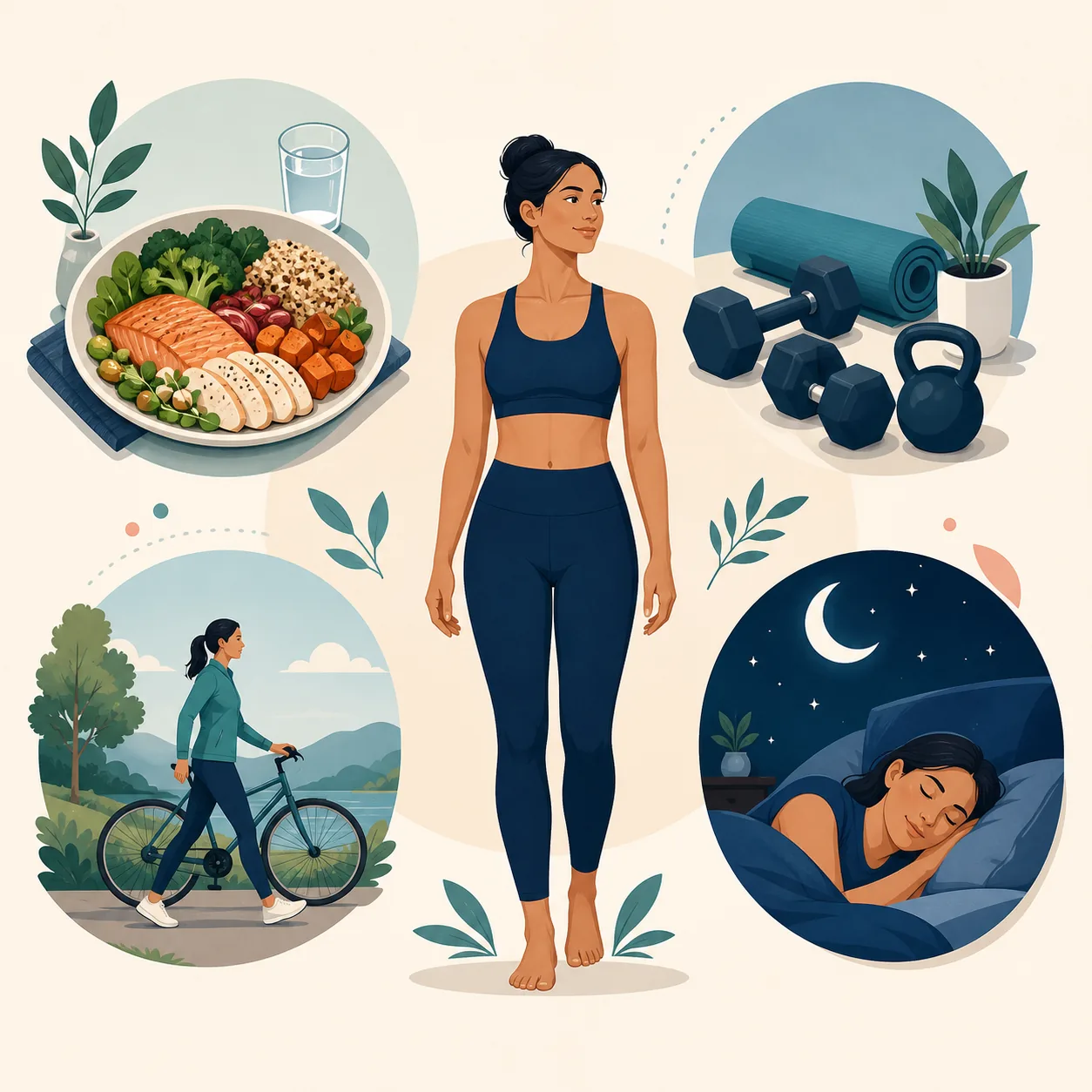
- Choose repeatable sessions. Use full-body or upper/lower sessions that cover pushing, pulling, squatting, hinging, and carrying as appropriate for your experience.
- Keep a simple record. Track exercises, sets, reps, and how hard the session felt so you can see whether performance is stable or improving.
- Progress gradually. Add a small amount of load, reps, or control when the current work becomes manageable, without sacrificing form.
- Protect recovery. Fuel sessions, sleep consistently, and schedule easier days when fatigue accumulates.
For a more personalized calorie and protein starting point, the Body Recomposition Calculator can connect body-fat goals with lean mass and training context.
Use daily movement, cardio, and recovery
Cardio is useful for heart health, work capacity, mood, and energy expenditure, but it does not need to become punishment for eating. Pick activities you can repeat: brisk walking, cycling, swimming, jogging, classes, or sport. Daily steps also matter because low-intensity movement is often easier to maintain than adding increasingly hard workouts.
Recovery is part of how to lower body fat percentage, not an optional reward after perfect training. Poor sleep and high stress can change hunger, food choices, training quality, and water retention. A plan that looks excellent on paper but leaves you exhausted may be too aggressive for your current life.
- Add movement you enjoy. Use walking, cycling, sport, or short activity breaks to raise regular movement without making every session maximal.
- Keep strength the anchor. Use cardio to support health and energy expenditure, not to replace resistance training when muscle retention matters.
- Protect sleep. A regular sleep window and a calmer evening routine can make appetite and training decisions easier.
- Watch stress load. If work, illness, or life stress rises, reduce training ambition before you reduce food further.
A practical four-week starting plan
Use the first month to build information and consistency, not to force a dramatic transformation. The exact meals and workouts can vary; the weekly review is the part that should stay stable.
- Week 1: establish a baseline. Use the same morning weigh-in routine when possible, measure waist once, take optional progress photos, and record normal meals and movement without trying to be perfect.
- Week 2: make two changes. Choose one food change and one movement or training change that reduce friction rather than adding a long list of rules.
- Week 3: repeat before reacting. Keep the routine steady, complete your strength sessions, and compare weekly averages instead of responding to one high or low day.
- Week 4: review the whole picture. Compare waist, weight trend, photos, hunger, sleep, energy, and training. Keep, reduce, or adjust one variable based on the combined evidence.
If the plan is working but the body-fat reading looks unchanged, do not assume nothing happened. Many home methods are noisy. If the plan is not workable, improve adherence and recovery before adding more restriction.
Track progress without chasing one number
A body-fat percentage estimate can be helpful for context, but home methods vary. Tape measurements depend on placement and tension; smart scales are affected by hydration and contact; visual comparisons depend on lighting and pose. Use one primary method under similar conditions and review it alongside other signals.
Weekly weight averages can show direction, while waist measurements and photos add context. Strength and energy help you decide whether the pace is sustainable. If the result changes suddenly after a salty meal, hard training session, travel, or a menstrual-cycle shift, wait for the trend to settle before rewriting the plan.
For method selection, see the guide to measuring body fat percentage and use the Body Fat Percentage Chart to understand ranges rather than treating them as a diagnosis.

| Signal | How often | Interpretation |
|---|---|---|
| Body weight | Several mornings per week, then use an average | Useful for direction, but daily changes are often water and digestion. |
| Waist measurement | Every one to two weeks under the same conditions | Can show change even when scale weight is noisy. |
| Photos or clothing fit | Every four weeks | Helpful visual context when lighting, pose, and distance are consistent. |
| Strength and energy | Each training week | A check on whether the deficit and recovery are still reasonable. |
Common mistakes when trying to lower body fat
- Changing the plan every few days. Constant changes make it impossible to learn what worked and amplify normal water fluctuations.
- Using a fast-loss promise as the target. The word fast can encourage extreme restriction, poor training, and rebound eating. Use a pace you can recover from.
- Doing only cardio. Cardio has real benefits, but ignoring resistance training can make a body-composition goal less useful.
- Treating a calculator as a diagnosis. An estimate cannot confirm health, hormones, or exact fat mass. It should guide questions, not replace professional care.
- Ignoring low-energy warning signs. Persistent fatigue, dizziness, sleep disruption, loss of menstrual periods, or a worsening relationship with food are reasons to slow down and seek support.
When to slow down or ask for help
This article is general education, not a personal medical plan. People under 18, pregnant or breastfeeding people, older adults with medical conditions, people using glucose-lowering or weight-loss medication, and anyone with a history of an eating disorder should get individualized advice before intentionally restricting food.
Stop treating a lower number as the goal if you have fainting, persistent dizziness, chest pain, severe weakness, repeated bingeing or purging, obsessive weighing, or major sleep and mood changes. A clinician or registered dietitian can help separate a reasonable body-composition goal from a plan that is becoming unsafe.
The same caution applies to very low body-fat targets. Lower is not automatically healthier, and a healthy range depends on sex, age, muscle mass, health history, and how the estimate was made.
FAQ: lowering body fat percentage
How long does it take to lower body fat percentage?
There is no universal timeline. It depends on starting body composition, food intake, training, sleep, health, and how accurately you measure. Use a multi-week trend rather than expecting a meaningful change from a few days.
Can I lower body fat without losing muscle?
You can improve the odds by using a moderate pace, eating enough protein, doing resistance training, sleeping well, and adjusting from real progress. It is not possible to guarantee that every pound lost comes only from fat.
Is cardio or strength training better for lowering body fat?
Both can help, but they solve different problems. Cardio supports health and energy expenditure; strength training helps provide a reason to keep muscle. A balanced plan is usually more useful than choosing only one.
Should I use a body-fat scale?
A smart scale can be useful for tracking a trend if you use it under similar conditions, but hydration and other factors can shift the estimate. Do not treat one reading as exact or compare readings from unrelated devices as if they were interchangeable.
Can I target belly fat with a specific exercise?
You cannot reliably choose where fat comes off first with a single exercise. Strength work can develop muscle in a region, while overall fat loss is influenced by total energy balance, genetics, and time.
What if my body-fat percentage is already in a healthy range?
You may not need to lower it. Consider strength, waist trend, fitness, sleep, energy, and health markers instead of forcing a smaller number. A lower percentage is not automatically a better outcome.
Final takeaway
The most reliable way to lower body fat percentage is a repeatable routine: a manageable calorie deficit, enough protein, progressive strength training, regular movement, recovery, and honest trend tracking. Build the plan around health and adherence, not an extreme deadline.
Sources and further reading
- CDC: Steps for Losing Weight — General guidance on gradual, sustainable weight loss and healthy habits.
- U.S. Physical Activity Guidelines — Federal guidance on aerobic activity, muscle strengthening, and movement.
- International Society of Sports Nutrition protein position stand — Evidence review on protein intake and exercise for active adults.
- CDC: BMI and its limitations — A reminder that screening measures do not directly diagnose body composition or health.