What Is BMI? Meaning, Formula, Categories, and Limits
A practical explanation of body mass index: what the number measures, how to calculate it, how to read adult ranges, and what it cannot tell you.

On this page
What BMI Means in Plain Language
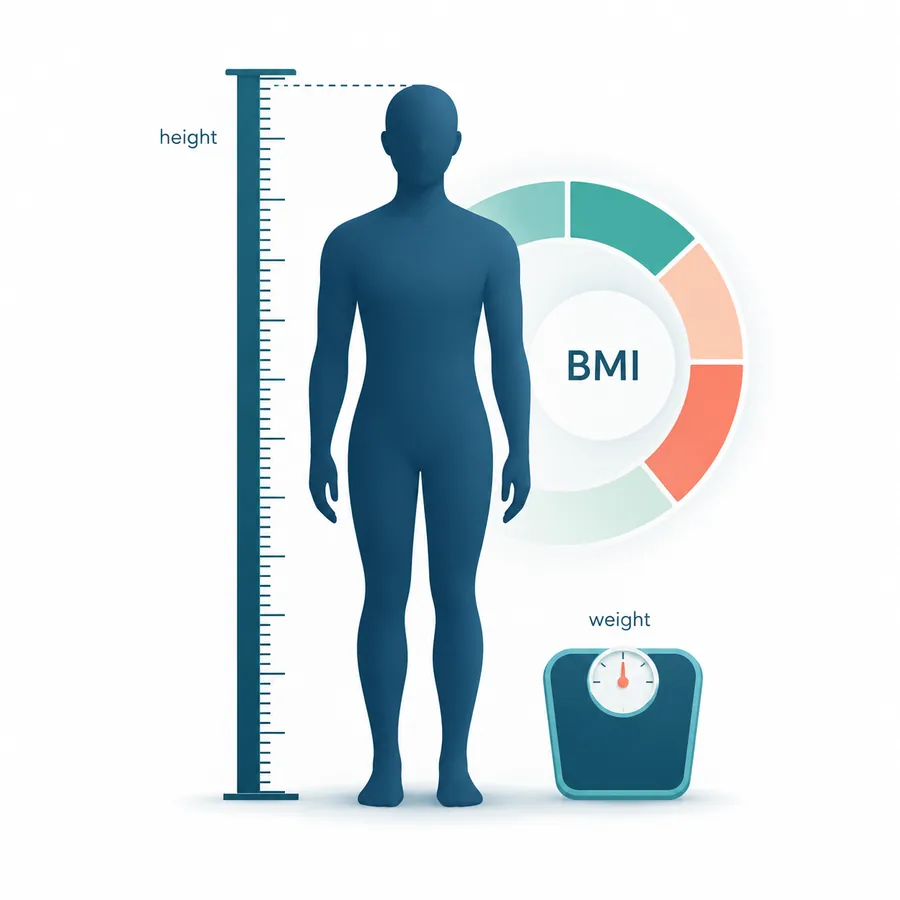
BMI is a quick way to compare a person’s weight with their height. The number is not a direct measurement of fat. Instead, it is a ratio that helps researchers, clinicians, and individuals describe weight status across large groups using the same starting point.
That makes BMI convenient: you only need height and weight, the calculation is inexpensive, and the result is easy to repeat. A BMI result can help you decide what to ask next, such as whether to review waist circumference, body-fat information, nutrition, activity, or a recent change in weight.
Start with the number, then add context
If you want to know what your BMI is, calculate it with consistent height and weight measurements. If you want to know what the result means for you, add age, muscle mass, waist size, body-fat information, health history, and the reason you are checking it.
What Does BMI Stand For?
BMI stands for body mass index. In everyday use, BMI and body mass index refer to the same calculation. It uses body weight and height to create a number in units of kilograms per square meter, although the units are often omitted when the result is displayed.
The index was designed as a population-level measure, not as a complete body-composition scan. It does not separate muscle, bone, organs, water, and fat. Two people with the same BMI can therefore have noticeably different physiques, waist measurements, fitness levels, and health histories.
What goes into the BMI number?
- Weight: The body mass used in the calculation, normally entered in kilograms or pounds.
- Height: The person’s height, entered in meters for the metric formula or inches for the imperial formula.
- A ratio: Weight is divided by height squared, which helps make values more comparable across different heights.
BMI Formula and a Worked Example
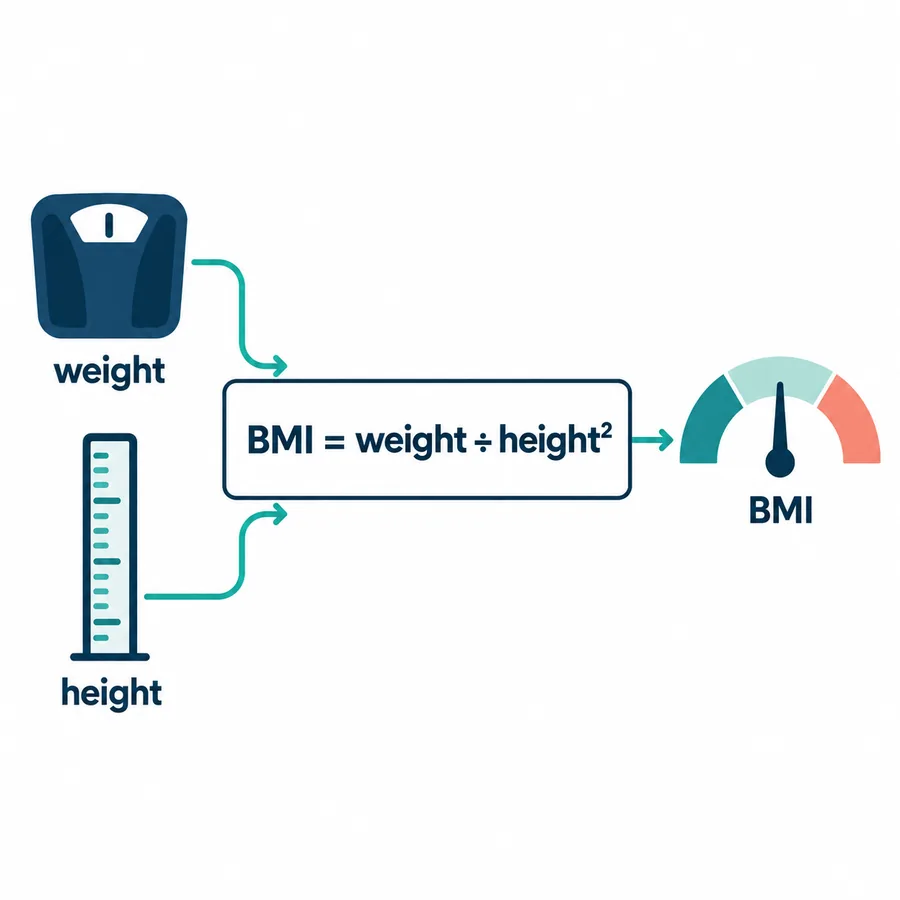
The metric BMI formula is weight in kilograms divided by height in meters squared. The phrase “squared” means that height is multiplied by itself. Convert the measurements first; entering centimeters where meters are expected will produce a result that is far too small.
People using pounds and inches can use the imperial version, which multiplies weight in pounds by 703 and divides by height in inches squared. A calculator is helpful because it handles the conversion and rounding, but knowing the formula makes the result easier to check.
Metric formula
BMI = weight (kg) ÷ height (m)²
Example: a person who weighs 70 kg and is 1.75 m tall has a BMI of 70 ÷ (1.75 × 1.75) = 22.9. That falls in the commonly used adult healthy-weight reference range, but the number alone does not describe body composition.
How to calculate BMI step by step
- Measure height without shoes and record it in meters, or convert centimeters to meters by dividing by 100.
- Measure weight under consistent conditions and record it in kilograms, or use the imperial formula for pounds and inches.
- Square the height by multiplying the height by itself.
- Divide weight by squared height and keep enough decimal places to see where the result sits relative to a category boundary.
Adult BMI Categories
Common adult reference charts divide BMI into underweight, healthy weight, overweight, and obesity ranges. These labels are used for screening and population health, not to diagnose one person or to define an ideal appearance. Different organizations and populations can add context or use different action points.
A boundary is not a cliff. BMI 24.9 and BMI 25.0 are separated by only 0.1, so a tiny change in measurement or rounding should not be treated as a dramatic change in health. If your result is close to a boundary, repeat the measurement consistently and focus on the broader trend.
| BMI range | Common label | How to read it |
|---|---|---|
| Below 18.5 | Underweight | Below the commonly used adult reference range; possible causes include body build, nutrition, illness, or recent unplanned weight loss. |
| 18.5–24.9 | Healthy weight | The commonly used adult reference range; it does not guarantee healthy nutrition, low body fat, or absence of disease. |
| 25.0–29.9 | Overweight | Above the common reference range; muscle mass, waist size, age, and population-specific guidance can change the interpretation. |
| 30.0 or higher | Obesity | A higher screening range associated with increased risk in populations; individual assessment still needs more than BMI. |
Use these categories to start a useful conversation, not to label yourself. A healthcare professional can interpret a result alongside symptoms, medications, medical history, and other measurements when those details matter.
What Can BMI Tell You?
BMI is most useful when the question is broad: how does weight relate to height, and is there a reason to look more closely? It can be a practical first screen in public-health work, routine conversations, and personal trend tracking. It is also useful because it is quick to repeat without specialized equipment.
- A repeatable starting point for discussing adult weight status.
- A simple way to compare height and weight without special equipment.
- A population-health measure that can support screening and research.
BMI Limitations: What the Number Leaves Out
BMI does not measure body fat directly. A muscular person can have a higher BMI without having the same body-fat pattern as another person in the category. A person with a BMI in the standard range can still have low muscle mass, high abdominal fat, or a health condition that BMI cannot reveal.
The index also says nothing about where fat is stored, how weight changed, what medications a person takes, or whether a result is affected by pregnancy, fluid retention, illness, or growth. These are not minor details when the goal is an individual health decision.
| Missing context | Why it matters | Possible next step |
|---|---|---|
| Muscle mass | Muscle contributes to body weight but does not have the same meaning as excess fat. | Add waist, body-fat, performance, and training context when useful. |
| Fat distribution | BMI cannot show whether fat is concentrated around the abdomen or distributed elsewhere. | Track waist circumference consistently if it is appropriate for you. |
| Age and growth | Children, teenagers, and some older adults need age-aware interpretation. | Use BMI-for-age guidance or discuss the result with a professional. |
| Population differences | Metabolic risk can occur at different BMI levels across populations. | Check local clinical or public-health guidance when it applies. |
Do not use BMI to change medication, diagnose an illness, justify an extreme diet, or judge another person. If you have symptoms or a sudden unexplained change, seek appropriate medical advice.
BMI vs Body Fat Percentage
BMI and body-fat percentage are related but not interchangeable. BMI describes weight relative to height. Body-fat percentage estimates how much of body weight is fat, although the result depends heavily on the method used. A photo estimate, tape formula, BIA scale, calipers, DEXA scan, and clinical assessment do not have identical accuracy or error patterns.
- BMI: Fast, inexpensive, and easy to repeat; useful for broad adult screening and conversations about height and weight.
- Body-fat estimate: Adds composition information, but every method has uncertainty and should be tracked under similar conditions.
- Waist measurement: Adds information about central fat distribution, but technique and population guidance still matter.
What Is BMI FAQ
What is BMI in simple terms?
BMI is a number calculated from height and weight. It helps place an adult result into broad screening categories, but it does not directly measure body fat or diagnose health.
What does BMI stand for?
BMI stands for body mass index. Body mass index and BMI are two names for the same height-and-weight calculation.
What is a healthy BMI for adults?
The commonly used adult reference range is 18.5 to 24.9. It is a screening range, not a guarantee of health and not a universal target for every person.
Is BMI the same as body-fat percentage?
No. BMI uses height and weight, while body-fat percentage estimates the share of body weight that is fat. The two measures can disagree, especially when muscle mass or fat distribution differs.
Do men and women use different adult BMI categories?
Most adult screening charts use the same broad cutoffs for men and women. The same BMI can still correspond to different body-fat levels and health context, so sex and body composition remain relevant.
The practical takeaway
BMI answers one narrow question: how does weight compare with height? It is useful because it is simple, but it is incomplete because it cannot show body fat, muscle, distribution, symptoms, or personal history. Use BMI as context, then choose the next measure or conversation that fits your real goal.
Sources and Further Reading
- CDC: Adult BMI Categories — Common adult categories and the distinction between screening and diagnosis.
- NHLBI: BMI Table — Adult BMI ranges used in weight-management education.
- World Health Organization: Body Mass Index — Background on BMI as a population and health measure and its interpretation limits.