How to Calculate BMI: Formula, Steps, and Examples
Use the metric or imperial BMI formula, work through a real example, and learn what to check before you interpret the result.

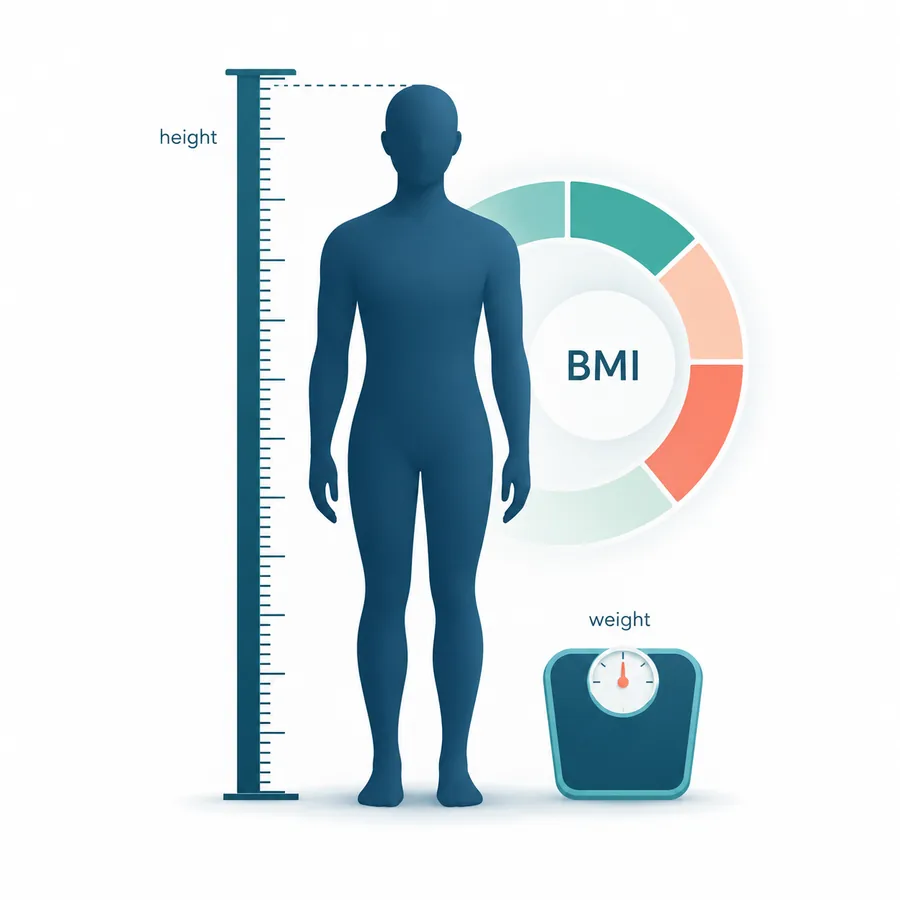
Table of Contents
How to Calculate BMI: The Fastest Way
To learn how to calculate BMI, start with body weight and height. The ratio is simple so people can compare results over time and health professionals can use consistent screening language. It does not measure body fat directly.
Choose one unit system before you begin. Use kilograms and metres for the metric formula, or pounds and total inches for the imperial formula. Mixing kilograms with centimetres, or feet with inches without converting, is the most common reason a hand calculation looks wrong.
The steps are: measure, convert, square the height, divide, and round at the end. Compare adult categories only for people 20 or older.
The one rule that prevents most mistakes
Height must be squared in metres or total inches. Do not square centimetres, and do not use only the inches left over after a feet-and-inches measurement.
Metric BMI Formula: Kilograms and Metres
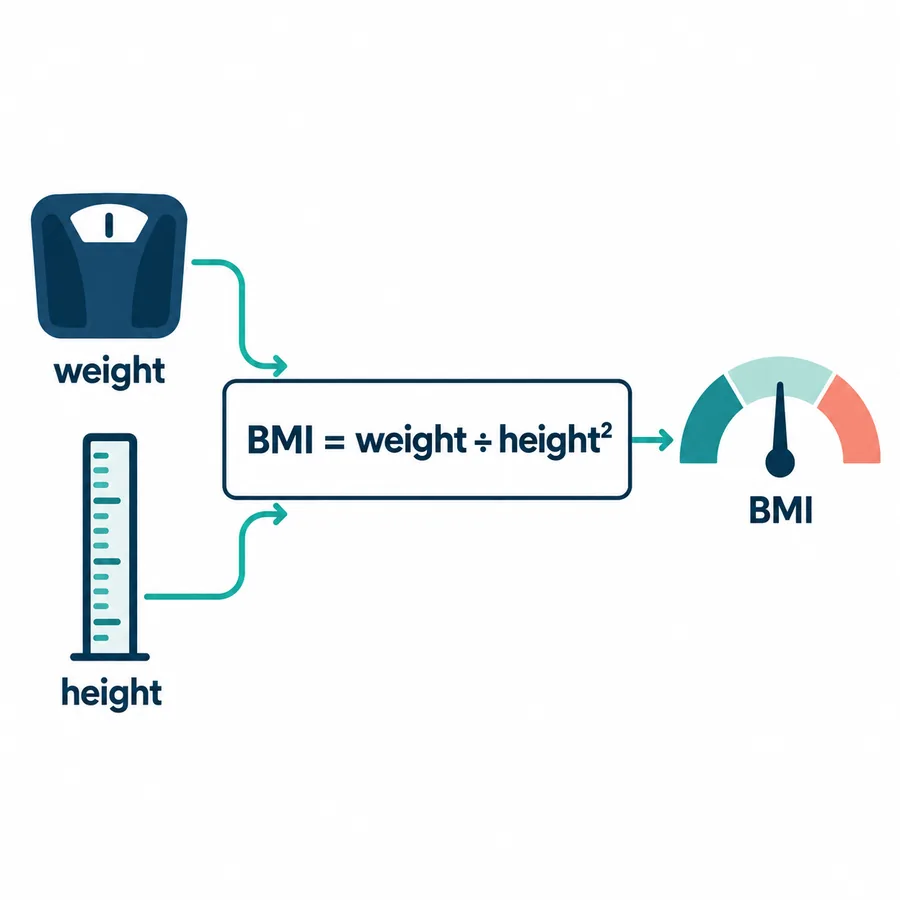
The metric formula is BMI = weight in kilograms ÷ height in metres². A height of 175 centimetres must become 1.75 metres before you square it. The result is expressed as kilograms per square metre, although people usually discuss it as a number such as 22.9.
Write the calculation on separate lines so a misplaced decimal is easy to spot. A wall measurement or reliable stadiometer is more consistent than guessing height from memory.
Metric formula
BMI = weight (kg) / [height (m) × height (m)]
Example: 70 kg ÷ (1.75 × 1.75) = 70 ÷ 3.0625 = 22.86, which rounds to 22.9.
Metric steps
- Record weight in kilograms. If the scale shows pounds, convert pounds to kilograms by dividing by 2.20462.
- Record height in centimetres and divide by 100 to get metres. For example, 168 cm becomes 1.68 m.
- Multiply the metre value by itself. For 1.68 m, height squared is 2.8224.
- Divide kilograms by the squared height. Keep extra decimals while calculating.
- Round the final BMI to one decimal place; rounding cannot improve measurement accuracy.
Imperial BMI Formula: Pounds and Inches
The imperial formula is BMI = 703 × weight in pounds ÷ height in inches². The 703 factor converts the pounds-and-inches ratio to the same scale used by the metric formula. You need total inches, not just the inches shown after the feet mark.
For 5 feet 9 inches, calculate 5 × 12 + 9 = 69 inches. Entering 9 instead of 69 makes the BMI meaningless.
Imperial formula
BMI = 703 × weight (lb) / [height (in) × height (in)]
Example: 154 lb at 69 in gives 703 × 154 ÷ 4,761 = 22.74, which rounds to 22.7.
Imperial steps
- Record weight in pounds and height in feet and inches.
- Convert height to total inches by multiplying feet by 12 and adding the remaining inches.
- Square the total-inch value. For 69 inches, 69 × 69 = 4,761.
- Divide pounds by the squared height and multiply by 703.
- Round once at the end and keep the inputs beside the result so it can be repeated.
Unit Conversion Checks Before You Calculate BMI
A calculator can hide a unit error because it will still return a neat-looking number. A quick conversion check is therefore part of the method, not an optional extra. Use one consistent system from start to finish, and label every value in your notes.
If you switch systems, convert both measurements rather than converting only the final BMI.
| Task | Rule | Check |
|---|---|---|
| Centimetres to metres | Divide centimetres by 100. | 175 cm becomes 1.75 m, not 175 m. |
| Feet and inches to inches | Feet × 12 + remaining inches. | 5 ft 9 in becomes 69 in. |
If the two unit systems produce very different BMI values, stop and check the conversion, the squared height, and whether a decimal point was misplaced.
Worked BMI Examples You Can Recalculate
Worked examples make the order of operations visible and are useful for testing a spreadsheet or calculator. The labels use common adult screening cutoffs; they are not a diagnosis.
| Height | Weight | Calculation | Adult screening label |
|---|---|---|---|
| 1.75 m | 70 kg | 70 ÷ 1.75² = 22.9 | Healthy-weight range |
| 1.60 m | 90 kg | 90 ÷ 1.60² = 35.2 | Obesity class 2 range |
| 69 in | 154 lb | 703 × 154 ÷ 69² = 22.7 | Healthy-weight range |
Use the same scale, height method, and time of day when tracking change. Consistency is usually more useful than pretending that one decimal place is exact.
Adult BMI Categories and What They Mean
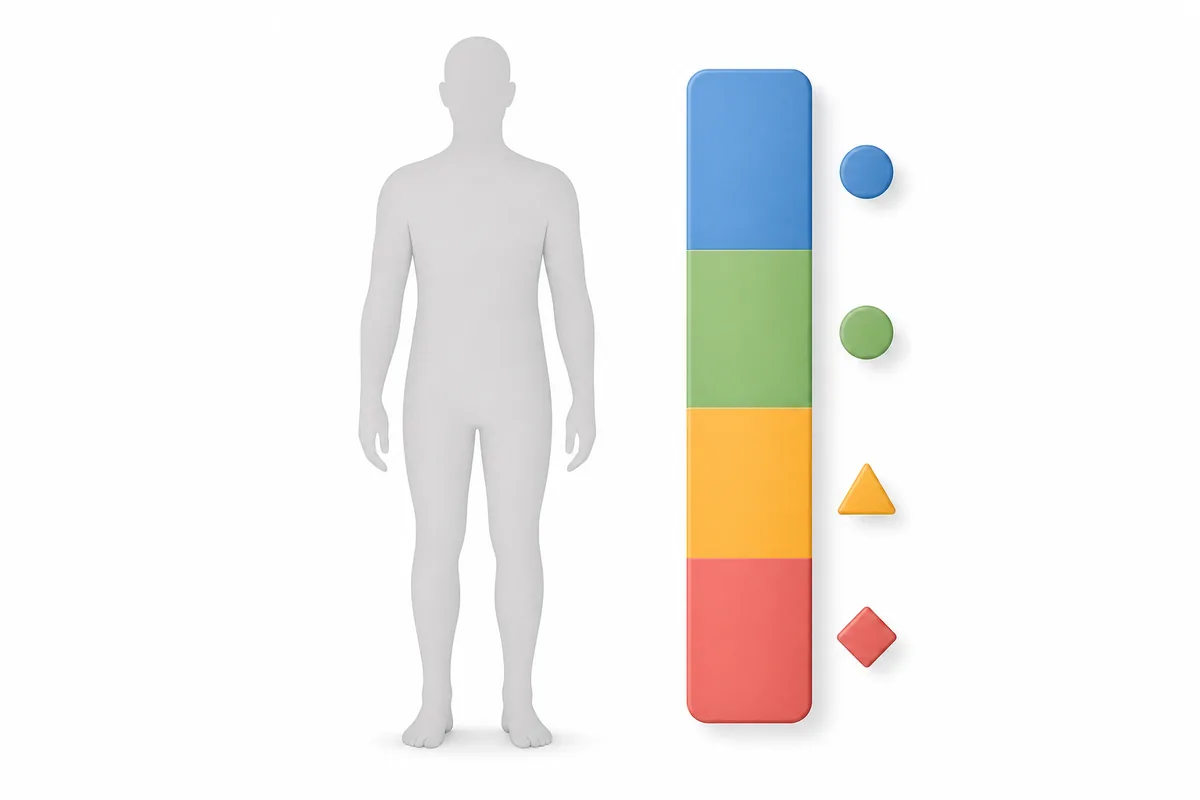
For adults age 20 and older, the CDC groups BMI into underweight, healthy weight, overweight, and obesity categories. Obesity is further divided into three classes. The cutoffs are screening conventions, not a complete description of health, fitness, or body composition.
Do not apply these fixed adult cutoffs to children or teenagers. Their BMI is interpreted as an age- and sex-specific percentile; pregnancy also needs clinical guidance.
| BMI range | Category | Interpretation note |
|---|---|---|
| Below 18.5 | Underweight | May call for nutrition or health context; the number alone cannot identify the cause. |
| 18.5 to <25 | Healthy weight | A common reference range, not a guarantee of good health or ideal body composition. |
| 25 to <30 | Overweight | A screening range; muscle mass, waist size, and population guidance can change the context. |
| 30 or higher | Obesity | The CDC further labels class 1 as 30–<35, class 2 as 35–<40, and class 3 as 40 or higher. |
A BMI category should guide the next question, not determine your worth or prescribe an extreme diet.
Estimate a Weight Range From Height
You can reverse the metric formula to estimate the weight range associated with the commonly used adult BMI reference range of 18.5 to 24.9. Multiply height in metres squared by each boundary. This produces a mathematical range, not a mandatory target and not a substitute for individual care.
At 1.75 m, height squared is 3.0625, so the estimates are 56.7 kg and 76.3 kg. A useful goal still depends on body and health context.
Metric reverse formula
weight range = BMI boundary × height (m)²
At 1.75 m: 18.5 × 1.75² to 24.9 × 1.75² = about 56.7–76.3 kg.
If you want a quick personalized calculation, the BMI Calculator can handle metric or imperial inputs and show the result without making you repeat the arithmetic.
How to Check Your BMI Calculation
Before interpreting a result, repeat the calculation with a calculator or spreadsheet and compare the unit labels. A reliable check is to convert the same measurements into the other unit system and calculate again; the result should be close after rounding.
- Check the height unit. Centimetres must become metres; feet and inches must become total inches.
- Check the square. Square the converted height, not the original centimetre or feet value.
- Check the order. Divide weight by height squared; do not divide height by weight.
- Check rounding. Keep extra decimals until the final step and display one decimal place.
- Check the age context. Adult categories are not the right interpretation for children and teens.
Want the arithmetic done for you?
Use the BMI Calculator to enter height and weight, switch units, and review the result alongside its adult-range explanation.
When BMI Needs More Context
BMI is useful because it is fast and inexpensive, but it cannot distinguish lean mass from fat mass or show where fat is stored. A muscular person can have a high BMI with relatively low body fat, while another person can have a BMI in the reference range and still have health risks that BMI does not capture. The same adult formula is commonly used for men and women, yet age, activity, waist size, illness, medication, and pregnancy can change the context.
- Muscle and training. Strength athletes may need waist, performance, and body-composition information alongside BMI.
- Children and teenagers. Use an age- and sex-specific growth reference rather than adult cutoffs.
- Pregnancy or sudden change. Ask a qualified healthcare professional how to interpret weight change or symptoms.
Use the calculation to frame a better question, not to diagnose yourself, change medication, or justify unsafe restriction.
How to Calculate BMI FAQ
What is the BMI formula in kg and cm?
Convert centimetres to metres first, then calculate BMI = weight in kilograms ÷ height in metres squared. For 70 kg and 175 cm, use 1.75 m: 70 ÷ 1.75² = 22.9.
How do I calculate BMI with pounds and inches?
Use BMI = 703 × weight in pounds ÷ height in inches squared. Convert feet and inches to total inches before squaring the height.
How to calculate BMI without a calculator?
Write the formula, convert the units, square the height, divide weight by that squared value, and round at the end. A calculator or spreadsheet reduces arithmetic errors, especially with decimals.
What BMI range is considered healthy for adults?
The commonly used adult reference range is 18.5 to less than 25. It is a screening range, not a guarantee of health or a required personal target.
Can I use adult BMI categories for a child?
No. The ratio can be calculated, but children and teenagers are interpreted with BMI-for-age percentiles that account for age and sex.
Use BMI as a starting point
A careful BMI calculation is easy: consistent units, height squared, weight divided by the squared height, and rounding at the end. The more important step is interpreting the result with age, muscle, waist, body-fat, health, and trend context.